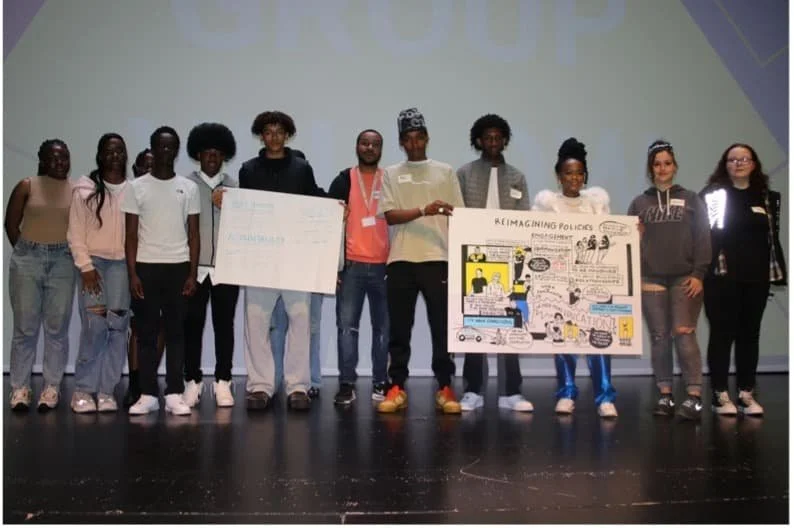
Overpolicing poor communities is not the answer.
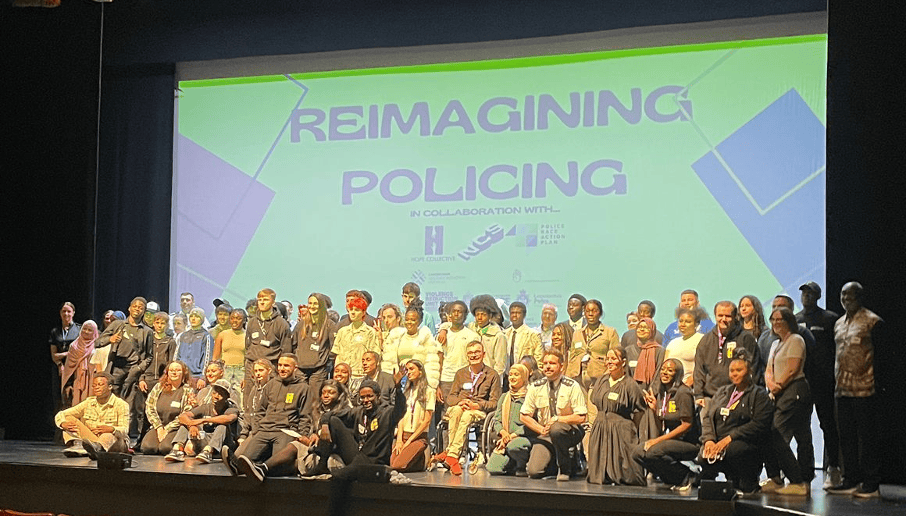
On July 8th, young people across the VRUs came together in Coventry to discuss the future of policing at the 33rd Hope Hack. We began the week with a new government and added to the momentum with a day to reflect and reimagine the current system.
We had great crew for the day, starting off with the hosts for the occasion, Usman and Lyv. The policeman and writer duo brought an amazing energy throughout the day and set the day as an empowering and safe space to be imaginative.
The morning consisted of sessions and performances. We started off with Jermain Jackman, who led an exercise to demonstrate the unfairness of society and stressed the importance of being creative and disruptive to thrive. Patrick Hutchinson’s keynote speech followed this, with an emphasis on allyship, human values and empathy alongside the opportunity to receive a signed copy of his book ‘Everyone Versus Racism’. There was also a youth panel, who presented the ‘My Tomorrow’ campaign and led the call for action to reduce violence affecting young people. Throughout this, LVT, Strizzy Strauss, Rylan and Raina performed uplifting, original songs infused with their experiences.
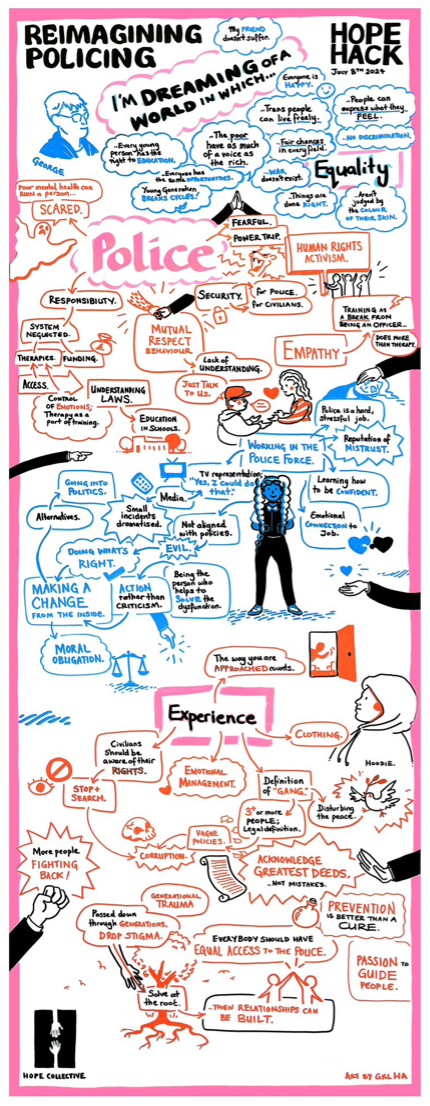
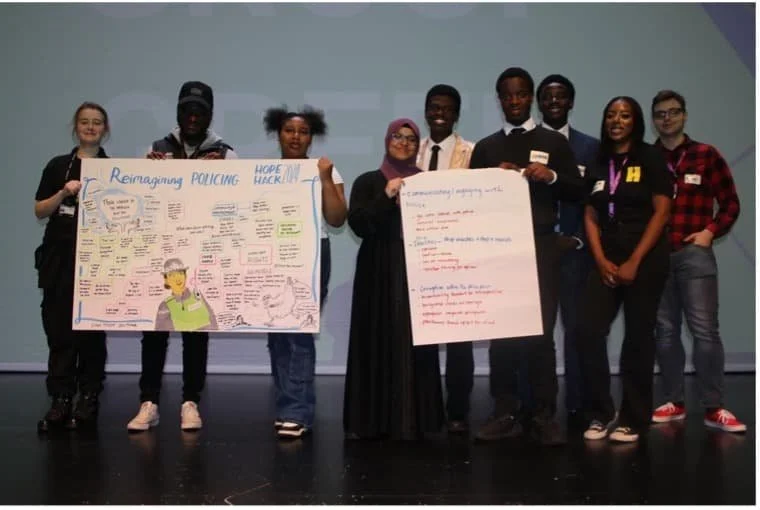
Following a quick lunch and some photos, we headed into the workshops. We got straight into it and allowed the young people to direct the conversations since they are experts by experience. The used the time to turn traumatic and frustrating experiences into a call for action. Their solutions were captured and presented to their peers and police officers, ready to listen and act.
Throughout the presentations, it was clear that over-policing poor communities is not the answer. The young people described their current perceptions of the police and emphasised the fear and mistrust they have. The hope hack made it clear that both police and young people wanted to work on this relationship; to develop mutual respect, they needed to see each other in more positive settings and build a connection.
They also reimagined their ideal police officer, who has morals, empathy and doesn’t abuse their power. They should also be respectful and friendly in their approach so they can expect the same for the communities they serve. To build trust and confidence from their communities, they need to change the way they communicate – the ‘one size fits all’ approach to communication can’t be applied to the variety of diverse communities across the UK. The youth also recognised that it’s not an easy role and believe emotional management should be prioritised and therapy should be widely offered.
Their discussions also focused on recruitment and training. They want to see officers who are emotionally connected to their role and understand the communities they serve. The media plays a large role in this, as young people want to be able to see themselves in such roles. In their training, they should learn to be more accountable, embed a more respectful approach and discuss the concerns of their communities.
Stop and search was a large topic during the workshop, as many shared their experiences. From their experience, they agree the experience needs to be improved straight from the start. Police officers should reduce the aggression in their approach and make sure they explain the rights of the individual involved to become role models.
Following the presentations, poet Nathan Parker performed a spoken word piece on the day. He saw that the youth want to ‘rebuild, reset and restart’, they want to have equity in ‘coproducing unity’ and that the ‘first bricks have been laid’. As the day came to a close, he emphasised that ‘hope exists and it’s right here in this room’ and the ‘collective change we speak of cannot come too soon’.